
A day after the Tamil Nadu government gave its go ahead to the Koodankulam Nuclear Power Plant, work at the Indo-Russian project started in full swing with officials expressing hope that the first unit would be commissioned "as soon as possible."
Bogged down by the over month-long agitation by local people led by anti-nuclear activists, commissioning of the first reactor of the controversial Koodankulam Nuclear Power Project has been delayed by three months.
India's nuclear regulator on Friday said it has granted permission for loading of fuel into the much-delayed Kudankulam atomic power plant.
Talks to break the logjam over the controversial Koodankulam Nuclear Power Project made no headway on Friday with protestors terming as "failure" the discussions with the Central government's expert committee on the issue.
The 11-day-old fast by locals demanding the scrapping of the Koodankulam nuclear power project was called off on Wednesday after Tamil Nadu Chief Minister J Jayalalithaa agreed for a cabinet resolution to request the Centre to halt the project.
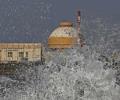
'...If the power situation does not improve in Tamil Nadu. The Congress will not allow the plant to start.' As the Supreme Court clears the decks for commissioning the controversial Koodankulam nuclear plant, A Ganesh Nadar checks the mood in the villages, the epi-centre of the protests.
Tamil Nadu Chief Minister Jayalalithaa on Sunday asked Prime Minister Manmohan Singh to advise Kerala not to build a new dam across Mullaperiyar and sought a financial package for the state.
'We have launched a massive outreach programme, not only at Koodankulam but at all operating projects and those proposed. You will see the change, though this needs time and some healing,' says Kailash Chandra Purohit, the new chairman and managing director of Nuclear Power Corporation
Amid public resistance to nuclear power projects at Jaitapur and Koodankulam, the Department of Atomic Energy has said the work on both plants will be completed but their could be delay.
Anti-nuclear activist S P Udayakumar, spearheading the stir against Koodankulam Nuclear Power Plant on Tuesday sent a legal notice to Prime Minister Manmohan Singh for his comments on the funding of the protests against the project.
An anti-nuclear forum spearheading the stir against Koodankulam Nuclear Power Plant on Monday said they would withdraw their protest if most locals favoured the project and demanded that the state government constituted panel visit all villages and towns affected by KNPP. "We hope the team comes to our villages, talks to our people, respects their feelings and takes a decision after considering the sentiments of the people."

'Not a single person I spoke to there believes that the Kundalkulam plant is safe.'
The condition of five persons including S P Udhayakumar, who are fasting for the last eight days as part the Koodankulam agitation, worsened on Tuesday with doctors advising shifting them to a hospital, officials said.
Blaming the Centre's "inaction" for the stalemate over the Koodankulam nuclear power plant issue, Tamil Nadu Chief Minister Jayalalithaa on Tuesday said her government was firm on suspension of the work on the controversial project till people's concerns were addressed.
The Koodankulam atomic power project is expected to be commissioned in September, capping months of delays due to non-availability of equipment and anti-nuclear protests.
Demanding that the Centre immediately scrap the Kudankulam Nuclear power project, social activist Swami Agnivesh on Thursday sought a high-level enquiry and public hearing to 'expose' corruption in the energy sector.

Check to see how!
The government should step in to prevent major infrastructure projects, including nuclear power reactors, from becoming a casualty of non-government protests.

R S Sundar, the site director of KNPP, on how the plant is producing 1,000 MW of nuclear power, the largest in the country.

Muzzling NGOs is unbecoming of a democracy. Self-confident democracies encourage, indeed applaud, the involvement of citizens' associations, including NGOs, in social and political decision-making and development planning. Instead, our paranoid government bullies and terrorises them, says Praful Bidwai.

The government must justify why we need to buy foreign reactors when we have developed up to 700 MWe unit-size pressurised heavy water reactors, a design which can be easily extended to 900 to 1000 MWe unit size. Why can't the 'Make in India' philosophy apply to indigenous nuclear reactors, more than 18 of which have been designed, built, and being operated by Indian engineers, asks Dr A Gopalakrishnan.
Anti-nuclear activist S P Udayakumar, who has been called a threat to the economic security of India by the Intelligence Bureau, speaks to A Ganesh Nadar.

The Centre has zeroed in on Kovalam village in Kanyakumari district for a new port, but fishermen's protests could derail this plan.

In a spontaneous outpouring of grief, thousands of people bid an emotional farewell to former President APJ Abdul Kalam who was on Thursday laid to rest with full state honours in his home town here amid chants of "Bharat Mata Ki Jai".

India's nuclear establishment is continuing its march of folly at the expense of safety in the false belief that atomic power is the energy of the future. It's not. Nuclear power is in relentless global decline, says Praful Bidwai.
